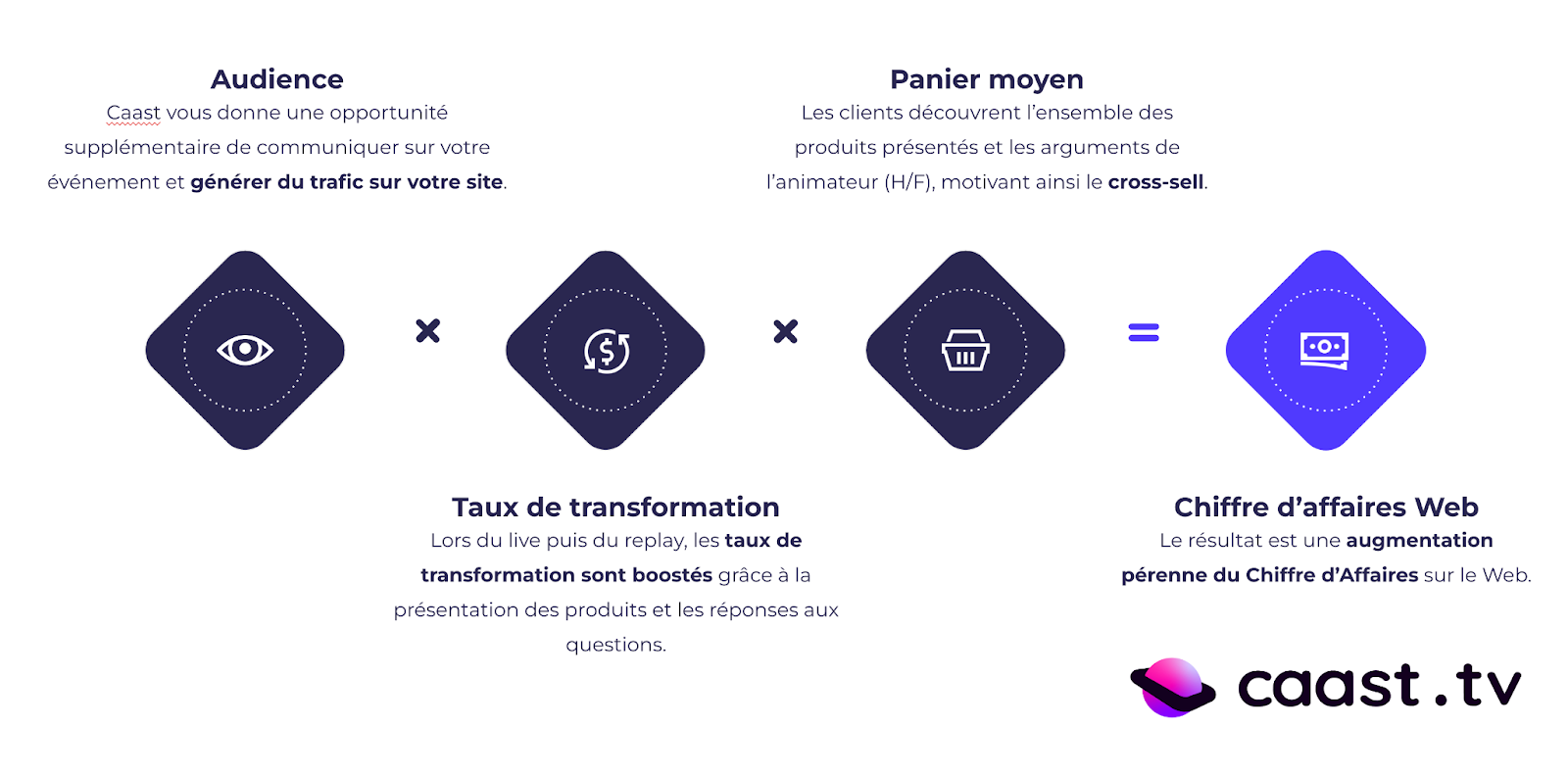
Revenue from Live events is calculated by multiplying the number of viewers by the conversion rate and average basket size. The formula is simple: the variable for success = number of participants. Since the entire success of your Live Shopping depends on attendance, you need to communicate in advance to tease your audience - so they show up on the day. Here are some tips to help you promote your Live Shopping event.
First, why do Live Shopping at all?
To make my content and formats more dynamic
Live Shopping lets you present your products in a more dynamic and original way. You can show your products in action, describe them in detail, add replays to your product landing pages - and take inspiration to a whole new level. Diversifying content formats is what's known as "retail entertainment" - and it's an essential part of building your marketing retention strategy.
To engage my audience
Live Shopping also offers brands a powerful way to generate buzz and engagement on social media. Customers can interact with the brand in real time, ask questions, and share their experience with their own communities. Live creates a stronger connection with your audience and sparks genuine interest in your products.
To humanize my e-commerce platform
Live lets brands promote their products in a creative, engaging way. Brands can use influential personalities, product experts, or simply their own team to present products dynamically and compellingly. This approach helps differentiate the brand from competitors and attract new customers - while retaining existing ones.
Communicating Effectively Around Your Live
Tailor Your Communication to Your Audience
This is a key factor: there must be alignment between the content and the target audience. Good content, well positioned, with a relevant incentive (a promotional offer, exclusivity, a product discovery) will help spark interest ahead of the live and drive participation on the day.
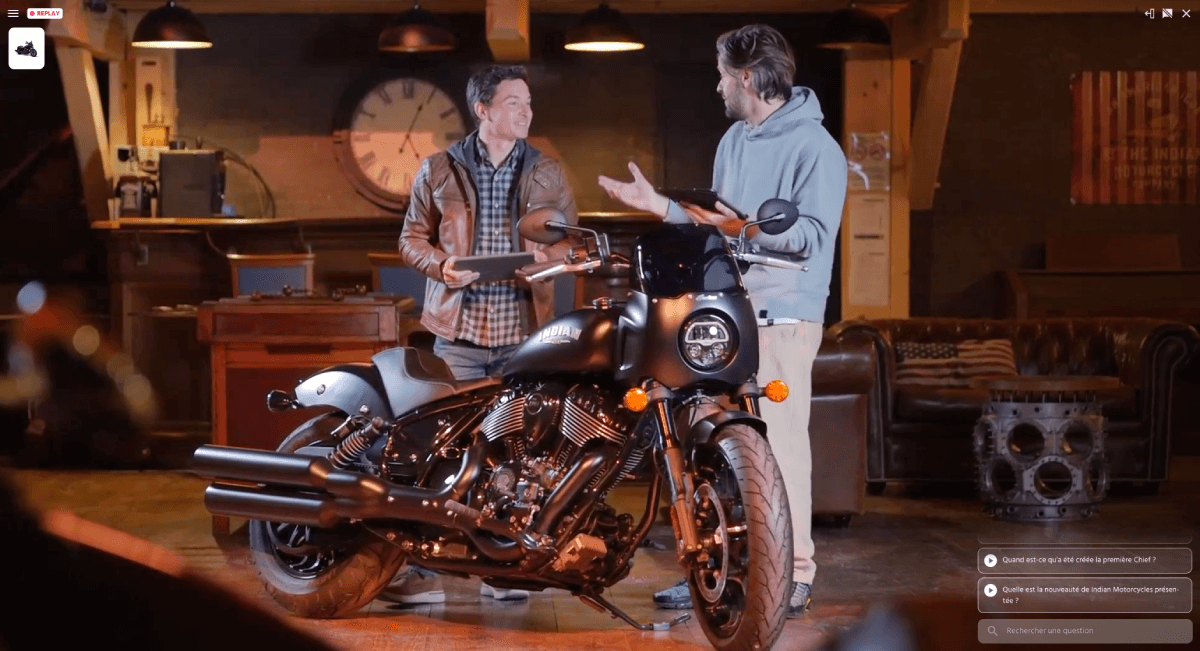
The iconic brand Indian Motorcycles presents its new model exclusively: the Indian Sport Chief - the ultimate American cruiser, live from its dealership in Nice.
Choosing the Right Host
There's no question about it - the host is the central element of your live. They're decisive in capturing and holding attention, convincing viewers of your product's qualities, and ultimately driving sales and increasing your customers' average basket size. They bring the brand's credibility, sharing expertise in simple, reassuring terms. That said, we recommend working in a duo format - one host on one side, and your product expert on the other, guaranteeing the accuracy of everything being said.
Choosing the Most Appropriate Platform
The primary goal of Live Shopping is usually to drive qualified traffic to your e-commerce platform.
In that case, there are two scenarios:
The first: broadcast the live exclusively on your site, via a dedicated landing page, and use social media purely as a media amplification tool. All your traffic stays on the e-commerce site, and your audience enjoys an optimal Live Shopping experience.
The second: broadcast the live on social media in addition to your e-commerce platform. Reach will be multiplied and the live's potential audience widened - BUT the experience will be degraded compared to what your e-commerce site offers: no real-time product display, no highlighted questions, no interactive features (contests, polls, etc.), and above all, no meaningful tracking data to analyze your results.
Best Practices for Successful Live Shopping
Build a Communication Plan
Organizing a Live Shopping event isn't enough to guarantee its success on the day. It's also crucial to build a dedicated communication plan and content strategy.
Extending the reach of your event:
To ensure the maximum number of people participate in your sessions, communicate well in advance across all your channels:
- Website
- Social media - organic and paid
- Email / SMS campaigns
- In-store relay signage
- Community relay if working with a content creator / influencer (feed posts, stories, reels, etc.) with tracked links
This helps you reach a wider audience and extend the reach of your Live Shopping event.
Building anticipation:
By communicating ahead of time, you create anticipation and excitement among your customers. This can motivate them to attend and tell their friends and family.
Providing useful information:
By communicating about your Live Shopping event, you "tease" useful details - such as which products will be featured, what discounts are on offer, and when it starts.
Don't overlook the importance of solid internal communication to rally your teams around the project! The active involvement of your sales, technical, and IT teams represents micro-influence in itself - and is proof of strong branding.
The Role of Media Visibility and Key Visuals
Key visuals are images that capture the essence of your event. They should be eye-catching and memorable to attract your target audience's attention. Key visuals can be used across your social media, emails, and landing pages to promote your Live event. Use product images, behind-the-scenes shots, screenshots from your live broadcast, or any other visual element that represents your brand and event.
Beyond grabbing your audience's attention, key visuals also help build a consistent brand image - your branding. By using the same colors, fonts, and graphic styles as your brand, you create a recurring visual identity in the minds of your audience and build a genuine universe around your Live.
Repurposing Content
Live Shopping events have value well beyond the live broadcast itself - thanks to replays: viewers can watch your previous Lives, driving traffic to your pages long after the event. At Caast.tv, we strongly recommend creating a dedicated Live Shopping page on your e-commerce platform - centralizing all your Lives by category and fueling your content marketing.
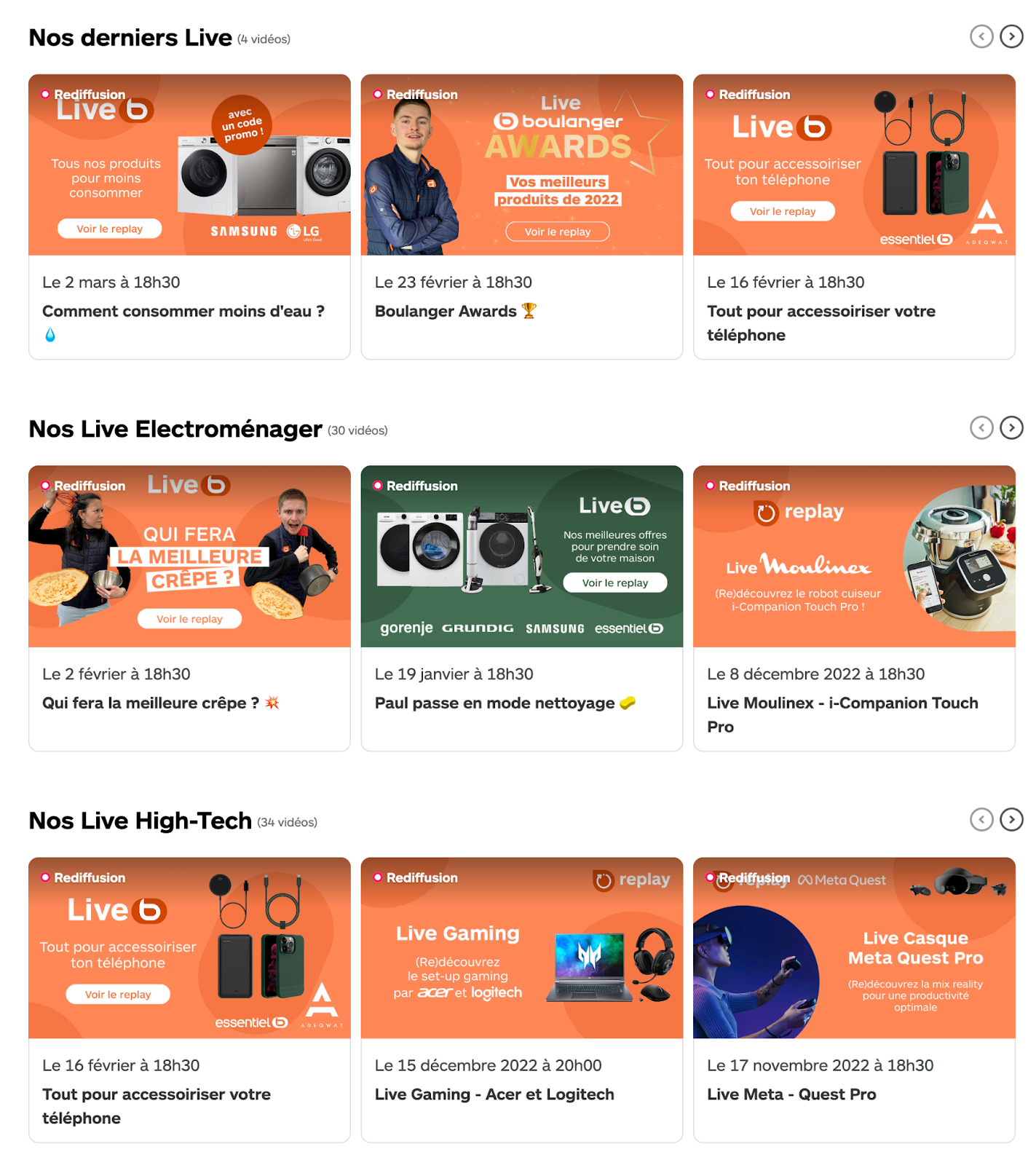
Example of a website page dedicated to replays organized by category
Taking Time to Analyze Your Results
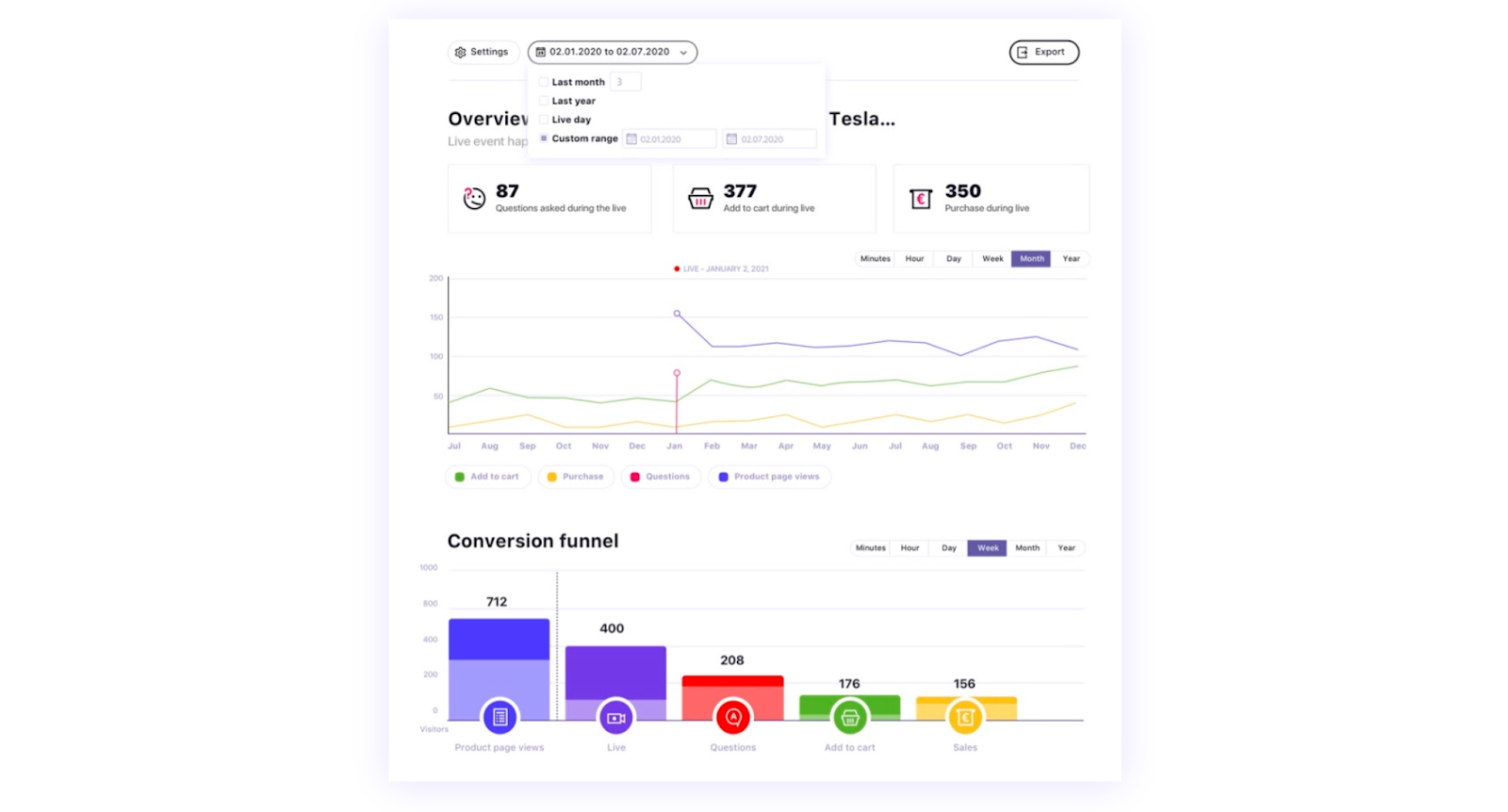
Always measure the performance of every event and campaign you run.
Number of viewers, messages, likes, add-to-carts, average viewing time, attention peaks… these are all performance indicators that will help you measure the results of your event. Take the time to compare these numbers from one Live to the next - it's the best way to identify areas for improvement and consistently produce better content.
In Summary
Live Shopping is both a high-performing sales channel and a powerful community-building tool. That said, running a successful live shopping event takes real communication effort.
You wouldn't exhibit at a trade show without informing your clients and prospects in advance - and you certainly wouldn't show up without sales materials, a logo, or branded collateral. An empty stand, hoping your audience finds you naturally, would be completely pointless. Live Shopping is no different. Despite its digital nature, it is still a living media - one that needs solid upfront communication to reach its full potential and truly reflect the DNA and values of your brand.
Ready to launch your Live Commerce strategy?
Discover how Caast can help you with a personalized demo.
See a live demo - 20 min