
Understanding the Fundamentals of E-Commerce
Analyzing Your Site's Current Performance
Analyzing the performance of an e-commerce site is crucial for any site owner looking to optimize their market presence. It means examining key indicators such as conversion rate, web traffic, and visitor behavior. This data helps you understand your site's strengths and weaknesses and develop coherent improvement strategies.
It's equally important to monitor page load speed, user experience (UX), and user interface (UI). Advanced web analytics tools can provide valuable insights into how users interact with your site - insights that can lead to strategic adjustments and improved overall performance.
Identifying Your Target Audience
Understanding who your potential customers are is a fundamental step in building any online sales strategy. This means defining personas that represent the different segments of your target market. Knowing their needs, buying behaviors, and preferences allows you to create more relevant and effective marketing campaigns.
Segmentation can be based on various criteria - age, gender, geographic location, or areas of interest. Once your target audience is clearly defined, it becomes much easier to personalize your offer and communicate in a more targeted way. These elements will also help you shape your omnichannel sales strategy.
Understanding the Online Buyer Journey
The online buyer journey is a complex process that begins with the very first interaction with your brand and continues well beyond the purchase. Understanding this journey is essential for optimizing the customer experience and increasing conversion rates. This includes studying the various touchpoints - online ads, organic search, social media, promotional emails, and more.
By breaking down each stage, from initial awareness to the final purchase decision, you can identify potential friction points that might discourage customers from buying - and address them. For example, simplifying the checkout process, providing detailed product information, or revisiting your brand strategy can have a significant impact on the final buying decision.
Innovation in the Service of E-Commerce: Live Shopping and E-Commerce 2.0
Live Shopping is one of the major innovations transforming e-commerce. It involves using live video to present and sell products - creating genuine real-time interaction between sellers and buyers, and humanizing the online shopping experience. E-commerce 2.0, meanwhile, refers to the use of the latest technologies to deliver an improved, personalized, and adaptive user experience.
These technological advances are reshaping how consumers discover and buy products. By integrating Live Shopping into your strategy, you can not only boost customer engagement but also leverage the influence of your hosts to drive sales. The result is a more immersive, interactive shopping experience that builds lasting customer loyalty.
Strategies to Increase Online Sales
SEO: Optimizing Your Site for Organic Search
Search engine optimization (SEO) is essential for improving the visibility of an online store. By implementing effective SEO practices, you can improve your site's ranking in search results - which typically translates into more qualified traffic. Focus on key areas such as relevant keywords, content quality, site structure, and image optimization.
Compelling page titles, well-written meta descriptions, and strategic use of strong tags also contribute to better visibility. Additionally, a mobile-friendly site with fast load times is now a non-negotiable requirement to meet both search engine algorithms and user expectations.
Leveraging Social Media to Promote Your Products
Social media has become an indispensable promotional channel for online businesses. It offers the ability to reach a large audience, generate engagement, and strengthen brand awareness. An active presence on platforms like Facebook, Instagram, or Pinterest can help build strong customer relationships and promote products in a targeted way.
Social media advertising campaigns also allow for precise audience segmentation, ensuring promotional messages reach the right people. Direct interaction with customers on these platforms also creates opportunities to gather valuable feedback and quickly adjust marketing strategies.
Building an Effective Marketing Strategy
A well-designed marketing strategy is essential for driving online sales. This includes choosing the right distribution channels, creating targeted ad campaigns, and developing attractive promotions. It's also crucial to regularly evaluate the effectiveness of different marketing actions and adjust plans based on results.
Implementing a relevant content strategy can also play a significant role in attracting and retaining customers. By providing valuable content that educates, informs, and entertains, you can establish authority in your field and build a loyal community around your brand.
Worth noting: your strategy will need to evolve depending on where your market and product ranges are in their lifecycle - from product launches to clearance promotions, bundled offers, and brand awareness campaigns.
Humanizing Your E-Commerce Site for Better Results

Cultura Live Shopping filming - a pioneer of Live Shopping in its sector in France
Adopting Innovative Sales Tools: Live Shopping and Social Commerce
Adopting innovative sales tools such as Live Shopping and Social Commerce can significantly humanize your e-commerce site. Live Shopping, in particular, creates a dynamic, engaging shopping experience where consumers can interact in real time with sellers, ask questions, and watch product demonstrations. It mirrors the in-store shopping experience - from the comfort of home. Live Shopping is also valuable because it feeds your content factory directly on your e-commerce site, notably through Replay.
Social Commerce, meanwhile, integrates purchasing directly into social media platforms, simplifying the buying process for users. By integrating these tools, brands can reinforce the social and interactive dimension of online shopping - and build deeper connections with their customers.
Shoppable Videos: Shorts Built for Your Product Pages
Short videos with integrated purchase functionality - commonly called "shoppable videos" or Shorts - are revolutionizing the online shopping experience by making it more human and interactive. These videos offer far more than a simple product presentation; they create a genuine emotional connection with customers.
First and foremost, Shorts enable authentic storytelling. By featuring real people using the products, they provide buyers with a more concrete and tangible perspective. These personal testimonials and usage demonstrations bring products to life - helping customers better imagine using them day to day.
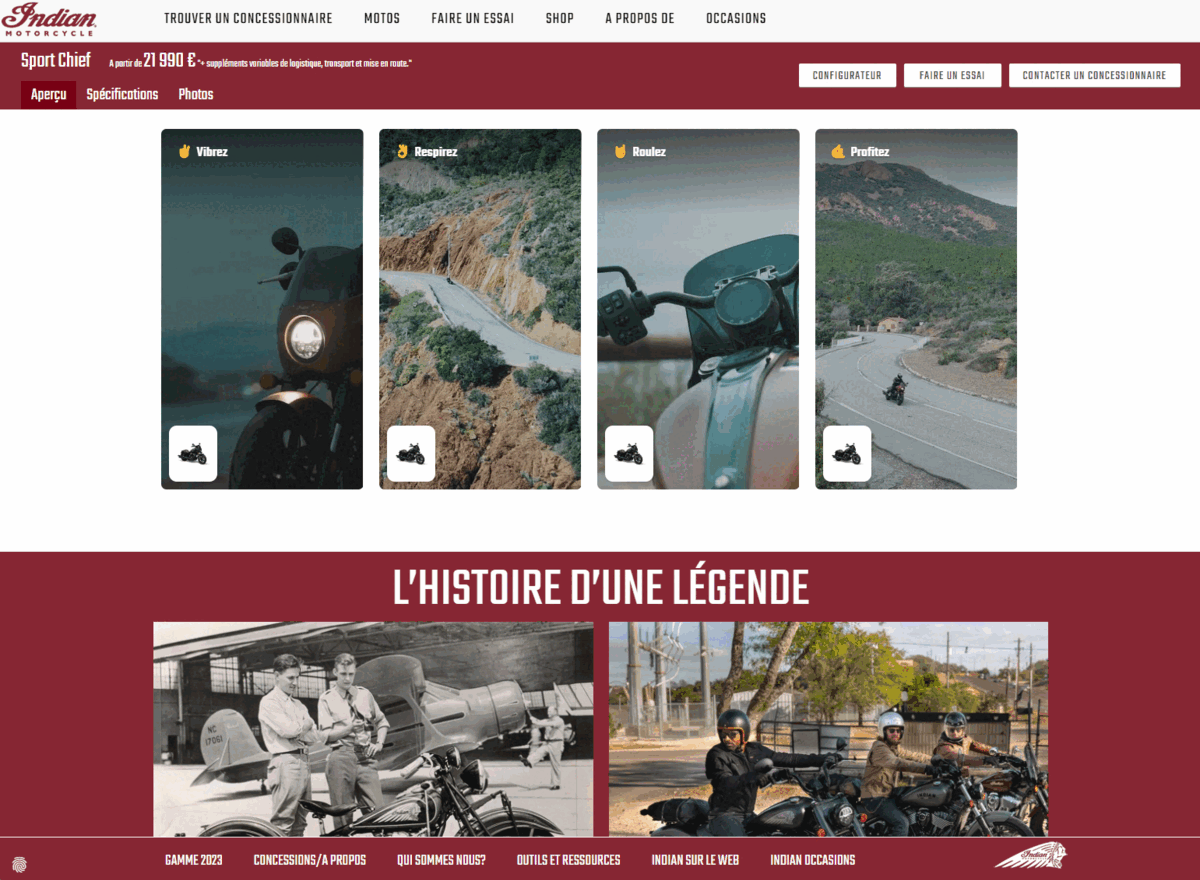
A product range page for Indian Motorcycles, featuring Shoppable Videos for an immersive shopping experience. Shoppable videos also offer a product-in-action view. Customers can see items from multiple angles, in motion, and even in real-world contexts. This greatly helps buyers evaluate a product's size, shape, and usefulness - reducing the risk of post-purchase disappointment.
Another key feature of Shorts is their ability to drive direct interaction, right from product pages. By enabling viewers to click on embedded purchase links or respond to polls, these videos create an immersive, engaging shopping experience. Customers feel actively involved in the buying process - reinforcing their satisfaction and brand loyalty.
User Generated Content (UGC)
User generated content (UGC) is a powerful method for adding a human dimension to your site. Photos, videos, reviews, and testimonials shared by customers are perceived as more authentic and trustworthy than traditional marketing content. By showcasing UGC, you can not only strengthen trust in your brand but also encourage other customers to share their own experiences.
UGC can be used in a variety of contexts - on product pages, in photo galleries, or as part of social media campaigns. It also encourages the community to engage more actively with the brand and participate in its promotion.
Personalizing Product Recommendations
Personalized product recommendations involve tailoring your offer to each customer's individual preferences. By analyzing behavioral data, it's possible to suggest products that match each user's specific interests. This approach increases conversion chances by making the online shopping experience more relevant and personalized.
Technologies like artificial intelligence and machine learning are increasingly used to refine these recommendations. By anticipating customer needs and surfacing products they're likely to appreciate, e-commerce sites can significantly improve customer engagement and loyalty.
Feedback, Participation, and Building a User Community
Gathering customer feedback and encouraging participation are key to building an engaged user community around your brand. Offering channels for customers to share their opinions and ideas not only validates their experience - it also provides valuable information for continuously improving your offer.
Forums, discussion groups, and surveys are effective ways to foster interaction between customers and the brand. Building a community not only establishes lasting trust, it also transforms customers into brand ambassadors who recommend your products and services to their own networks.
Measuring Impact and Continuous Improvement
Using Analytics Tools to Track Performance

Analytics tools are indispensable for measuring the impact of your e-commerce strategies and driving continuous improvement. They provide detailed data on user behavior, conversion rates, and the effectiveness of marketing campaigns. By interpreting this data, you can identify trends, isolate problems, and uncover growth opportunities. Platforms like Google Analytics and your e-commerce tools - including Caast - allow you to track a wide range of KPIs that are essential for making informed decisions. Analyzing customer journeys and cart abandonment rates, for example, can reveal improvement opportunities in your sales funnel.
Understanding and Responding to Customer Feedback
Understanding and responding to customer feedback is vital for maintaining satisfaction and building customer loyalty. Reviews - whether positive or negative - are a valuable source of information for evaluating how your brand and products are perceived. Responding constructively to feedback shows customers you value their opinions and are committed to delivering a positive experience.
Customer feedback can also guide product innovation and the development of new features. By listening to your customers, you can adapt your offer to better meet their expectations - and stand out in the market.
Continuous Testing and Optimization
Continuous testing and optimization are essential for improving your e-commerce site's effectiveness. Methods like A/B testing allow you to compare different versions of a page to determine which performs better in terms of conversion rate and engagement. This helps you optimize content, design, and marketing strategies empirically.
It's important to stay agile and adapt quickly to market shifts and evolving consumer preferences. By embedding a culture of continuous improvement, you can ensure your site stays competitive and meets the highest industry standards.
We also recommend running post-session retrospectives (REX) with your teams and stakeholders to better identify areas for improvement.
Ready to launch your Live Commerce strategy?
Discover how Caast can help you with a personalized demo.
See a live demo - 20 min