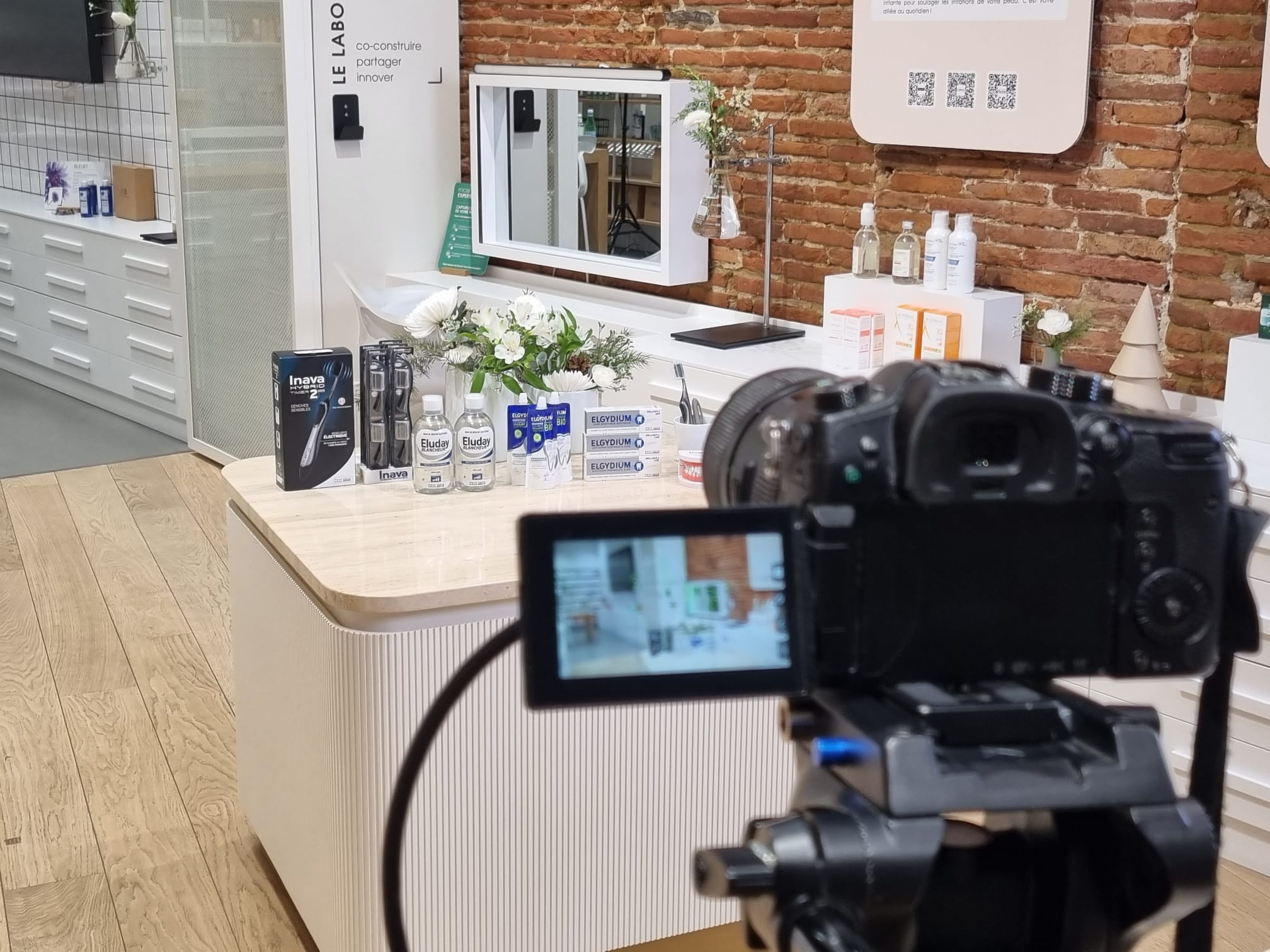
Understanding Live Shopping and Its Rise in 2020
What Is Live Shopping?
Live Shopping is a sales engagement tool in e-commerce that merges the real-time shopping experience with the advantages of digital. This solution lets buyers interact in real time with hosts, ask questions, and place orders while watching a live broadcast. Live Shopping creates an interactive and dynamic environment that encourages online purchases.
This concept, firmly rooted in the e-commerce trend, stands out for its ability to add a human dimension and create a direct connection between brand and consumer - all online. In France, although Live Shopping is still in its early stages compared to Asia and the United States, companies are eager to leverage it to enrich the customer experience, with significant momentum already building since 2020.
The Origins of Live Shopping
While some see Live Shopping as a digital version of TV shopping - which first appeared in the 1980s - Live Shopping itself emerged in 2017 on the Chinese market, pioneered by Alibaba's marketplace.
Far beyond a simple product promotion or purchase incentive, Live Shopping offers an in-depth presentation of items, highlighting their benefits, contextual usage, and environment. The primary goal remains increasing sales, but the method has evolved. Live advice, interactions, Q&A sessions: a whole ecosystem unfolds to give consumers a clear and detailed picture of the products they are considering buying.
The Impact of the COVID-19 Pandemic on Live Shopping's Rise
The COVID-19 pandemic acted as a catalyst for Live Commerce due to lockdown measures and restrictions that pushed consumers towards online shopping alternatives. As a result, 52% of consumers started buying online in 2020 in response to the health situation (CoMarketing News - Statista, 2024). The inability to visit physical stores accelerated the development of new forms of digital commerce, creating fertile ground for Live Shopping to flourish.
As businesses had to quickly adapt to changing consumer behaviour, Live Shopping emerged as a solution to maintain the connection with customers while offering an enriching and safe shopping experience from home.
Key Drivers of Live Shopping Growth
The E-Commerce Market: The Engine Behind Live Shopping
The French e-commerce market has been growing in terms of revenue since its inception. Between 2019 and 2023 alone, revenue jumped from €103.4 billion to €159.9 billion - an increase of nearly half. The market continues to grow despite significant shifts.
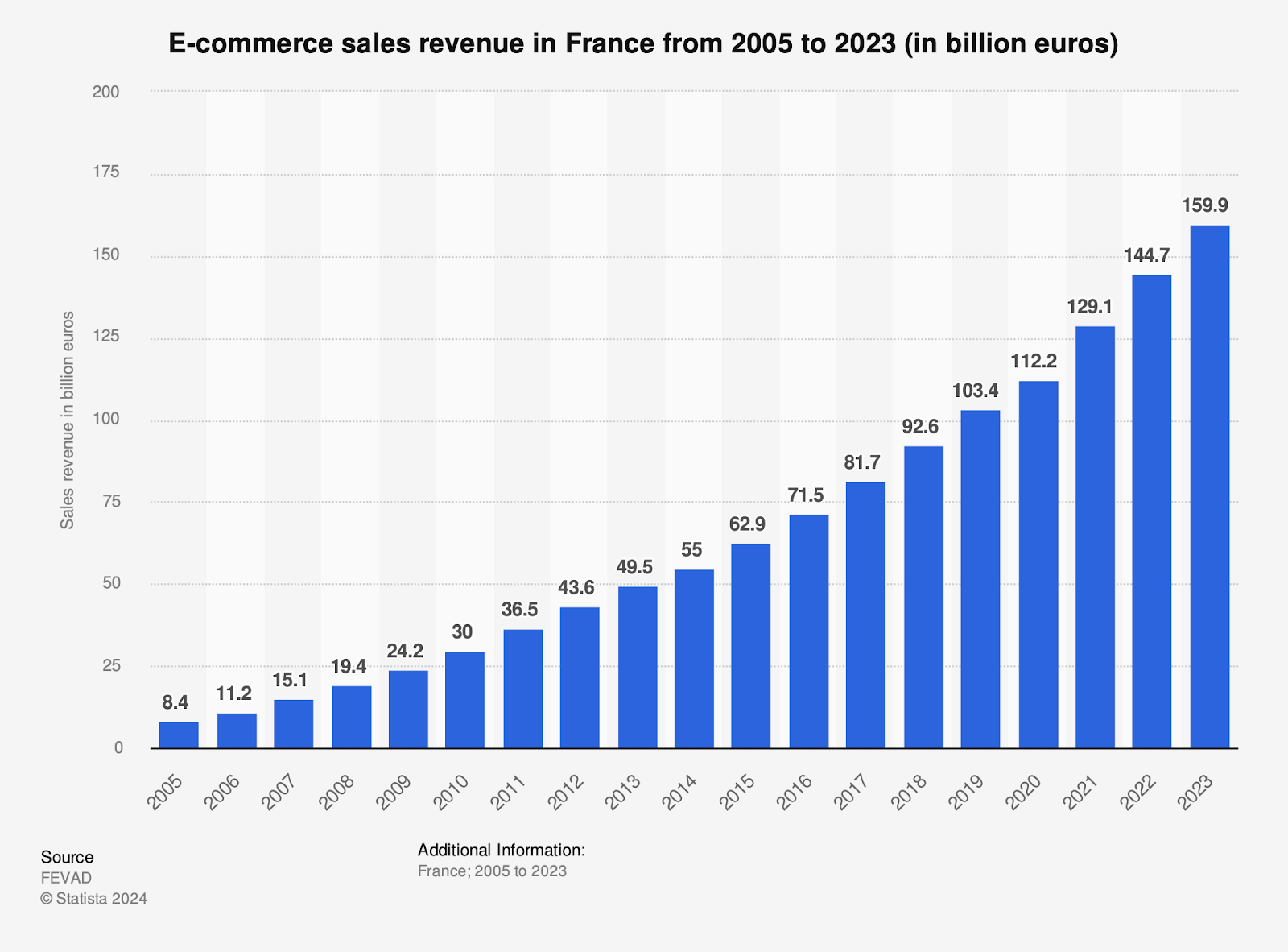
Revenue generated by e-commerce in France from 2005 to 2023 (in billions of euros). The e-commerce landscape is dominated by industry giants, though changes are underway - particularly with peer-to-peer marketplaces (Vinted, Leboncoin) gaining ground.
In terms of monthly visits, Amazon remains the market leader, closely followed by Leboncoin. It is worth noting that international marketplaces such as Aliexpress, Shein, and eBay coexist with French players like Sncfconnect, Leroy Merlin, and FNAC.
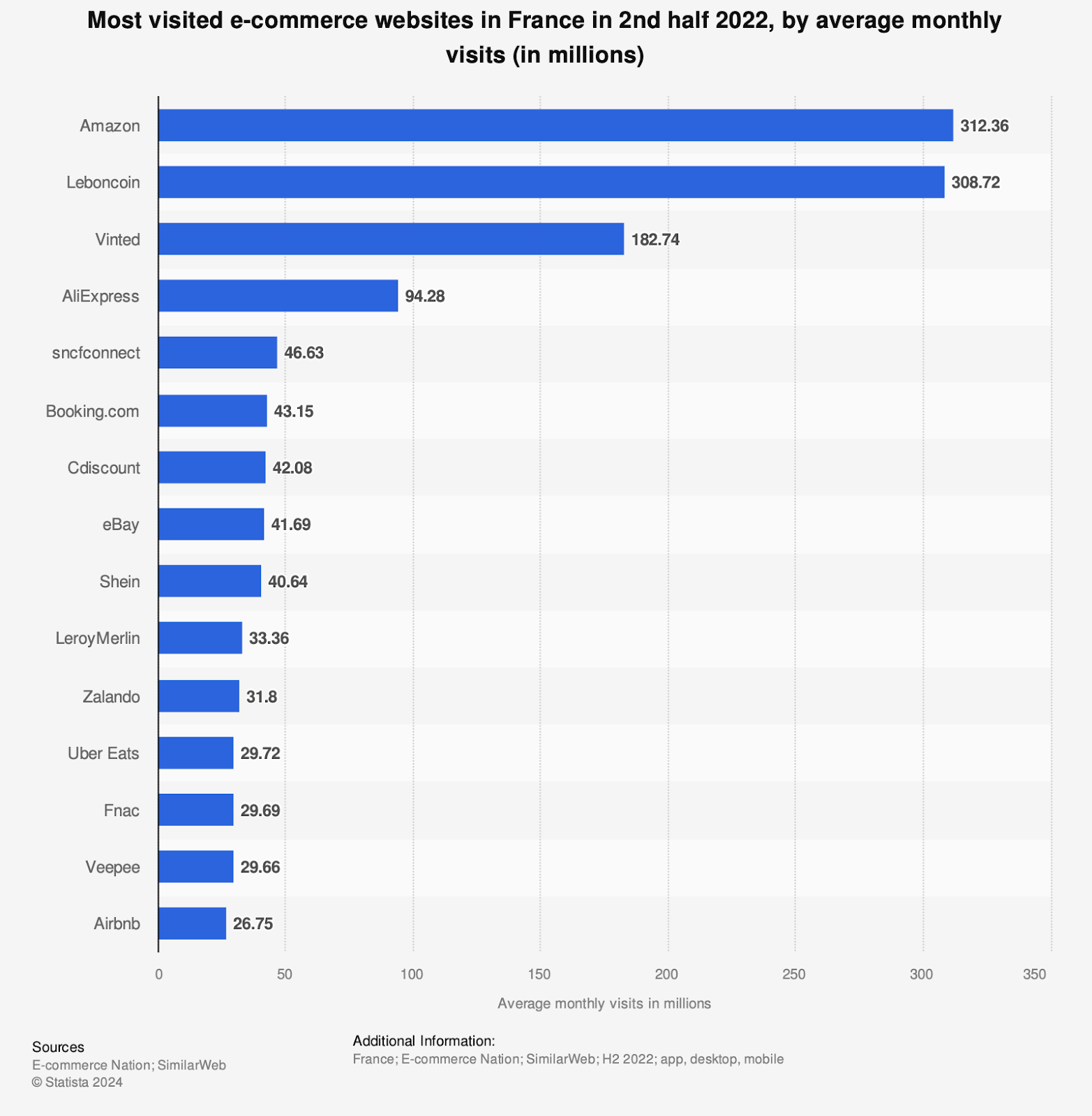
Most visited e-commerce sites in France in the second half of 2022, by average visits (in millions). These dynamics clearly illustrate the need for online retailers to differentiate themselves in a constantly evolving ecosystem - one with solid growth, but also strong international competitors to challenge through innovative approaches.
Technological Adoption and Improved Infrastructure
The growing adoption of streaming technologies and the continuous improvement of live broadcasting platforms are key factors driving Live Shopping's rise.
The typical profile of online shoppers is also evolving in ways that favour Live Shopping. The 18-69 age group is buying more and more online, with 82% of 18-24 year-olds, 88% of 25-39 year-olds, 86% of 40-59 year-olds, and 81% of 60-69 year-olds (CREDOC, ARCEP - Statista 2024).
This trend is reinforced by increasing broadband access in French households, with fibre installation rates rising from 3.4% in 2017 to 12.3% in 2020 (ARCEP - Statista 2020).
Desktop computers remain the preferred device for online purchases, used by 96% of online shoppers (Survey M-commerce and Q commerce - Capterra 2023). Smartphones are also significant. Tablets, however, tend to be used for other activities rather than online shopping.
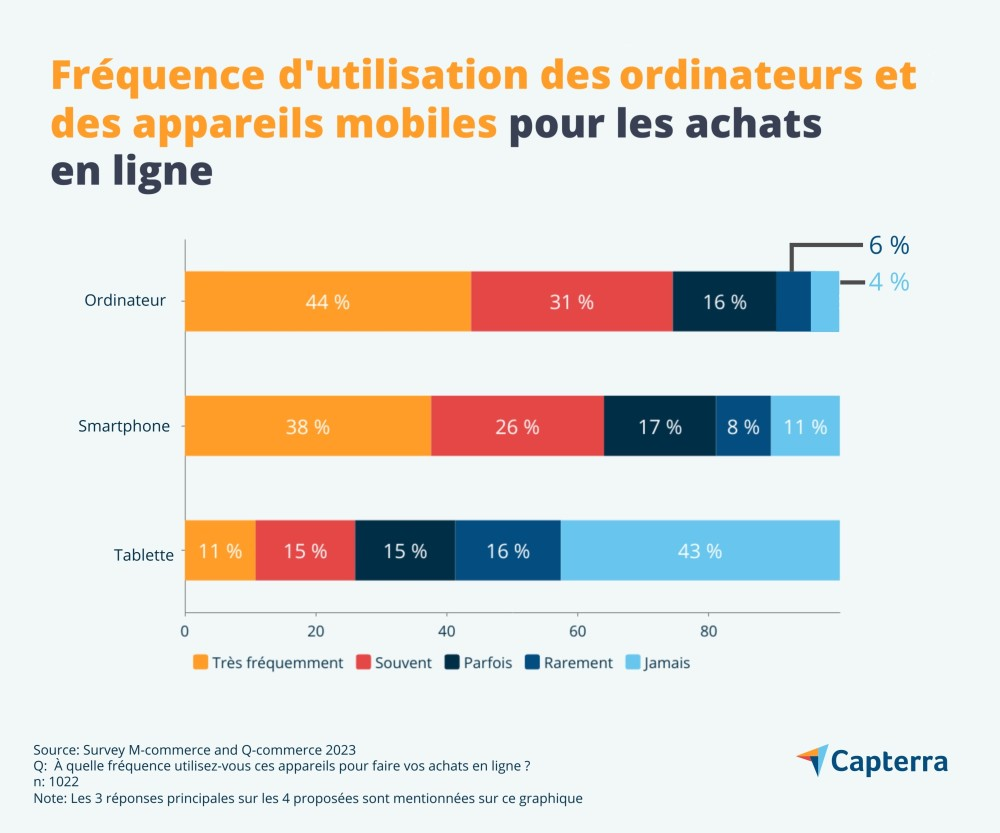
Frequency of use of computers and mobile devices for online shopping
Consumer Behaviours That Live Commerce Addresses
Customers are increasingly seeking a more interactive, personalised, and entertaining shopping experience. Live Shopping meets this demand by offering a rich and engaging purchasing experience that goes far beyond a simple online transaction.
The fact that Live Shopping generates six times more engagement than standard online videos reflects this shift in consumer expectations - favouring interaction and quality content.
What makes Live Shopping particularly compelling is its accessibility on both mobile and desktop, fitting naturally into different phases of the online purchase journey. When shoppers seek additional information, 54% do so on desktop and 39% on mobile. This need is directly addressed by the Q&A functionality on Live Shopping platforms like Caast.
By meeting these needs and creating a human connection with the buyer, brands tap into consumers' emotions.
Innovative Marketing Strategies
Aware of the need to stand out in a competitive commercial environment, brands are adopting increasingly innovative marketing strategies. Live Shopping gives companies the opportunity to showcase their products in a dynamic way, turning their offering into a genuine show.
By integrating Live Shopping into their marketing strategy, brands can not only increase visibility but also build an authentic relationship with their customers - fostering long-term trust and loyalty.
Benefits of Live Shopping as a Strategic E-Commerce Tool
Real-Time Engagement and Interaction with Customers
Live Shopping enables direct, real-time interaction with customers, which is a significant advantage for brands. This proximity drives consumer engagement and allows for instant responses to questions, creating a friendly and reassuring shopping experience.
This form of interaction also reinforces a sense of community belonging - a key element in building brand loyalty.
Higher Conversion and Retention Rates
Live Shopping has proven to be a powerful lever for boosting conversion rates. Data suggests it can multiply them up to tenfold online - a striking figure that underlines the effectiveness of this commercial approach.
Moreover, the immersive and personalised nature of Live Shopping promotes customer loyalty, as customers feel valued and are therefore more inclined to return and make repeat purchases.
Creating an Immersive and Personalised Shopping Experience
Live Shopping transforms the act of shopping into a full-blown event. By leaning into immersion and personalisation, this approach allows consumers to enjoy a unique experience that goes well beyond simply acquiring a product.
Thanks to technology, personalisation possibilities are virtually limitless, offering customers a tailored experience that precisely matches their needs and preferences. The replay is a key component of the new purchase journey created by Live Shopping.
Constantly Advancing Technology
Another advantage of Live Shopping today is that the solutions and technologies remain open to innovation in their features and uses. Vendors are making their solutions more robust while enabling integration of artificial intelligence and user-generated content.
Platforms like Caast, which offer seamless Live Commerce integration, allow e-commerce businesses to implement this solution in under 30 minutes - making the innovation accessible even to small businesses looking to energise their sales strategy.
The Role of Influencers and User-Generated Content
Influencer Partnerships to Reach New Audiences
Influencer partnerships are a powerful lever for Live Shopping success. These web personalities have a loyal and engaged audience, representing a real opportunity for brands to extend their reach and connect with new demographics.
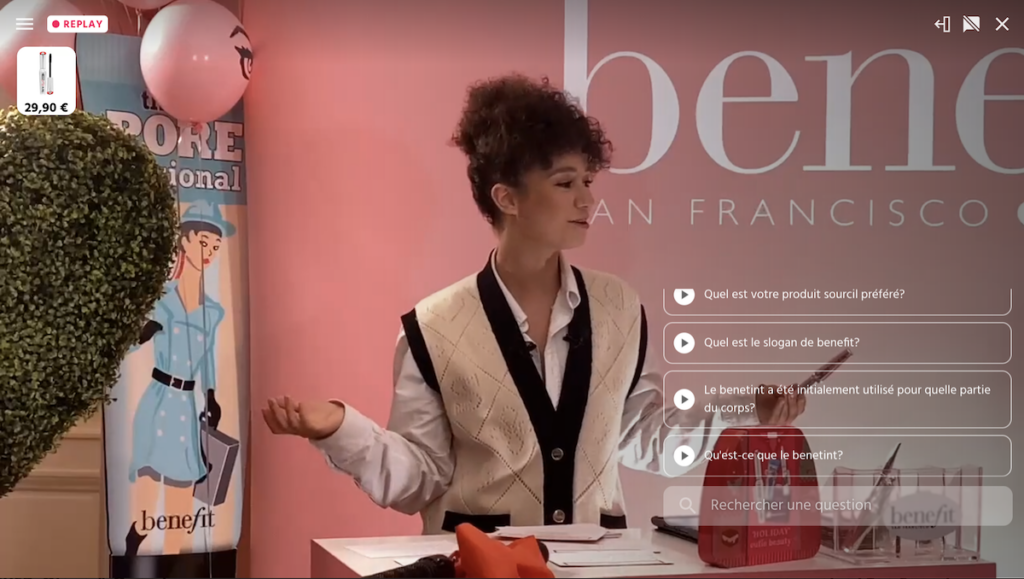
Influencer Léna Situation hosting a Benefit Live Shopping for Sephora. Influencers, through their ability to generate engagement, help humanise the brand and present products in an authentic and credible way - encouraging the purchase decision. Featuring them as hosts during Live Shopping events is an effective way to leverage this positively.
This is exactly the approach taken by Sephora, which regularly features Léna Situations and Nikki Tutorials to sell cosmetics and demystify their use for consumers.
Using User-Generated Content to Build Trust
User-generated content - such as reviews and testimonials, as well as videos and online ratings - is a powerful tool for establishing brand trust and credibility. In the Live Shopping context, integrating this type of content helps reassure potential customers and encourages them to take the plunge and buy.
Showcasing positive experiences from other consumers creates a social proof effect that can significantly influence purchasing behaviour. User testimonials can be incorporated directly into Live Shopping sessions.
The Impact of Social Media on Live Shopping's Visibility and Popularity
Social media is an essential channel for broadcasting and popularising Live Shopping. It provides an ideal platform for promoting live events, capturing attention and generating interest among wide audiences.
Indeed, 68% of European internet users visit social media every day, while others do so once or several times a week (Statista, 2024). This channel should therefore be prioritised to maintain your Live Shopping and brand community. Multi-streaming is also a useful tool for generating more traffic and conversions during your Live Shopping sessions.
The Future of Live Shopping
Integration of Advanced Technologies: Augmented Reality and Artificial Intelligence
The integration of advanced technologies such as augmented reality and artificial intelligence promises to further revolutionise Live Shopping. These technologies will enable the creation of even more immersive and personalised experiences - for example, offering the ability to virtually try on products before purchasing.
Combining Live Shopping with these technological innovations has the potential to radically transform the way consumers interact with brands and shop online.
Global Expansion and Cultural Adaptation
Live Commerce is expanding globally, with markets like Europe and North America beginning to follow the lead of Asian countries where the practice is already well established. This expansion will require cultural adaptation, with brands needing to localise their Live Shopping strategies to meet the specific characteristics of each market.
Cultural adaptation will be a key factor in ensuring the success of Live Shopping internationally, taking into account differences in purchasing behaviour, preferences, and consumer expectations.
Outlook and Upcoming Challenges for Live Shopping
The prospects for Live Shopping are vast, offering many opportunities for brands that want to innovate and stand out. However, the sector will face challenges - particularly around regulation, data protection, and sustaining long-term consumer engagement.
Companies will also need to continue investing in training and technological skill acquisition to fully exploit the potential of Live Shopping, while ensuring they deliver a consistent and high-quality customer experience.
Ready to launch your Live Commerce strategy?
Discover how Caast can help you with a personalized demo.
See a live demo - 20 min